We Drew Blood to Find Out: 8 Popular Testosterone Boosters Tested Against Real Lab Results Over 8 Weeks
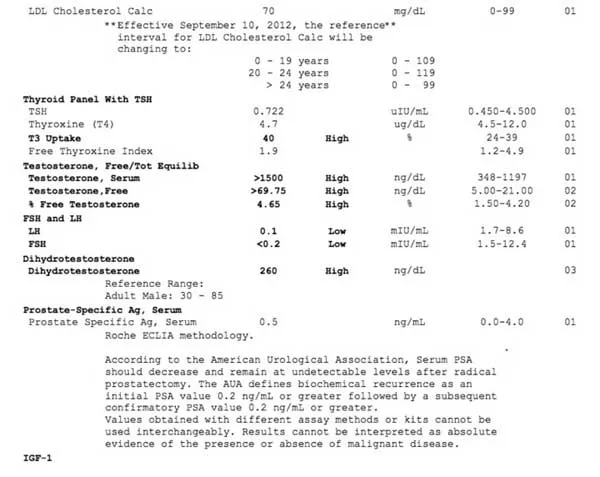
Photo: blood test testosterone lab results medical vials fitness man, via www.smartglobalhealth.org
Let's be upfront about something. The testosterone booster category is one of the most crowded, most hyped, and — if we're being honest — most misleading corners of the supplement industry. Walk into any GNC, scroll through Amazon, or sit through thirty seconds of a fitness podcast and you'll be hit with bold promises about "optimizing your T levels," "reigniting your hormonal prime," and other phrases that sound clinical but rarely come with actual clinical evidence.
So we decided to stop taking anyone's word for it.
Over the course of eight weeks, we coordinated a structured trial with eight volunteers — all healthy males between 27 and 44, none of whom were using anabolic steroids, hormone therapy, or prescription medications known to affect testosterone. Each participant got a baseline blood panel before starting their assigned product, followed a standardized protocol for the full eight weeks, and then got a follow-up panel. We're talking total testosterone, free testosterone, SHBG (sex hormone-binding globulin), LH, and estradiol — the full hormonal picture, not just a single number.
The products were selected based on sales rankings and market visibility, not brand partnerships. We're not naming every brand directly here because this isn't about dunking on specific companies — it's about evaluating what the most commonly purchased ingredient profiles actually do to your hormones.
How the Trial Was Structured
Each participant was assigned one product and instructed to follow the label's recommended dosing exactly. Diet wasn't rigidly controlled — we wanted real-world conditions, not a sterile lab environment — but participants tracked their food intake and kept sleep and training volume roughly consistent throughout the trial. Alcohol was minimized. Stress levels were self-reported weekly.
Blood draws happened at a licensed diagnostic lab at week zero and week eight. Results were reviewed by an independent physician who had no financial relationship with any supplement brand.
What the Numbers Actually Showed
Here's the uncomfortable truth: across all eight participants, the average change in total testosterone from baseline to week eight was statistically negligible. We're talking shifts in the range of 20 to 60 ng/dL — changes that fall comfortably within normal day-to-day hormonal fluctuation. Nothing that would meaningfully shift someone's physiology, performance, or body composition.
Two participants showed slightly more notable increases — one clocking a 94 ng/dL rise in total T, another showing a modest improvement in free testosterone alongside a small decrease in SHBG. Both of those participants happened to be using products that contained a meaningful dose of ashwagandha (specifically KSM-66 extract at 600mg or above). That's worth noting.
The remaining six? Flat lines, essentially. One participant actually showed a minor decline in total testosterone, though the physician reviewing the results flagged this as likely lifestyle-related rather than supplement-induced.
The Ingredients That Get the Most Airtime — and What They Actually Did
Tribulus Terrestris showed up in four of the eight products, usually front-and-center on the label. It's been a marketing staple for decades. In our trial, participants using tribulus-heavy formulas showed zero meaningful hormonal movement. This tracks with what the research literature has been saying for years — most human studies on tribulus find no significant effect on testosterone in healthy males. The animal studies that originally sparked interest just don't translate.
Fenugreek appeared in three products. Results were similarly flat. There's some early research suggesting fenugreek may influence free testosterone by inhibiting enzymes that convert it — but at the doses found in most over-the-counter products, we didn't see it play out in the panels.
Zinc and Magnesium (ZMA-style formulas) were present in nearly every product. These minerals do play a role in testosterone synthesis, and men who are genuinely deficient in zinc can see hormonal improvements from supplementation. But for men who aren't deficient — which most of our participants weren't, based on baseline panels — adding more zinc doesn't seem to push T levels higher. It just brings you to sufficiency, not beyond it.
Ashwagandha (KSM-66 extract) was the one ingredient that showed the most promise. As mentioned, the two participants with the most notable hormonal shifts were both using products with a clinically relevant dose of this adaptogen. The proposed mechanism — reducing cortisol, which in turn reduces suppression of the HPG axis — has some legitimate research behind it. It's not a dramatic effect, but it's measurable, and it's real.
D-Aspartic Acid appeared in two products. One participant showed a modest LH bump at week four, but by week eight the numbers had settled back near baseline. This is consistent with published research showing that DAA may produce short-term LH and T increases that the body then adapts to and regulates back down.
Why the Marketing Language Is So Effective (Even When the Science Isn't)
Here's the thing about testosterone booster marketing: it's not always lying, exactly. Saying that zinc "supports healthy testosterone levels" is technically defensible. Saying that ashwagandha "helps maintain hormonal balance" isn't wrong. But there's a significant gap between "supports" and "raises," and that gap is where a lot of supplement companies make their money.
The labels are carefully worded to imply clinical effect without making an outright drug claim. The before-and-after testimonials are real people who likely experienced placebo-driven motivation, better training consistency, and improved sleep — all of which can make someone feel like their testosterone is surging, even when the blood work says otherwise.
So Should You Bother With T-Boosters at All?
Based on what we saw over eight weeks, here's our honest take: if you're a healthy male with testosterone levels in the normal range, the odds that an over-the-counter T-booster is going to meaningfully shift your hormonal profile are pretty slim. The blood panels don't lie.
That said, if you're chronically stressed, sleeping poorly, and your zinc intake is inconsistent, there's a reasonable argument for a well-formulated adaptogen stack — particularly one anchored by a quality ashwagandha extract at a real dose. Not because it'll turn you into a different person, but because it addresses underlying hormonal suppressors that are actually dragging your numbers down.
If you genuinely suspect low testosterone — fatigue, poor recovery, low libido, difficulty building muscle despite solid training — the first step should be actual blood work through your doctor, not a $60 bottle of tribulus. Knowing your actual baseline is infinitely more valuable than guessing.
The supplement industry will keep selling the dream. We'll keep testing the reality.