Nootropics Won't Save Your Workout — But Here's What Might Actually Sharpen Your Focus in the Gym
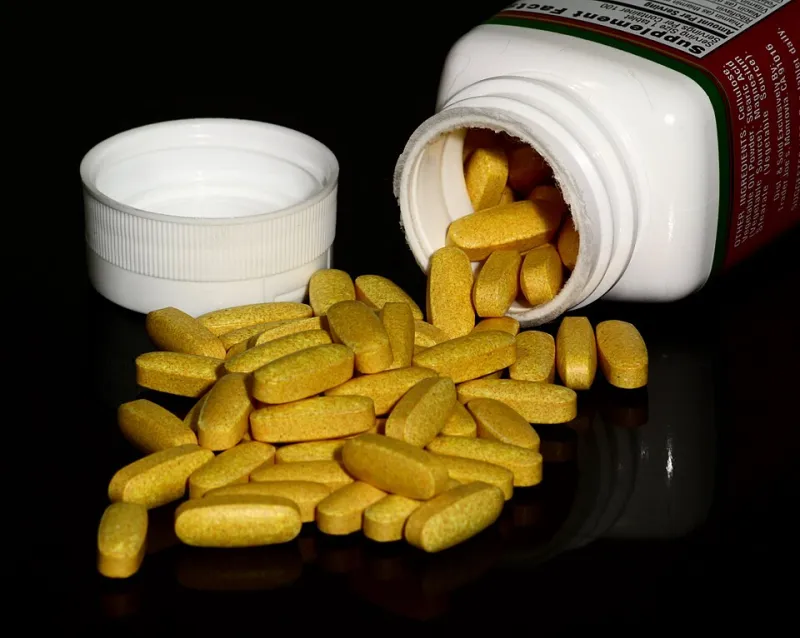
Photo: Meodipt at English Wikipedia, Public domain, via Wikimedia Commons
Somewhere between the rise of biohacking culture and the explosion of YouTube supplement sponsorships, nootropics found their way into the gym bag. These so-called "brain boosters" — Lion's Mane mushroom, alpha-GPC, bacopa monnieri, phosphatidylserine — are now showing up in pre-workouts, standalone capsules, and stacks marketed specifically to lifters who want to "unlock mental performance."
It's a compelling pitch. Who wouldn't want sharper focus, faster reaction time, and a mind-muscle connection that actually fires on all cylinders? The problem is that the marketing is running about five years ahead of the science, and most of what's being sold to gym-goers is built on a foundation of wishful thinking and cherry-picked research.
Let's break down what's actually happening here.
What a Nootropic Actually Is (And Isn't)
The term "nootropic" was coined in the 1970s by a Romanian chemist named Corneliu Giurgea. His original definition was pretty strict — a compound had to enhance learning and memory, protect the brain, and have essentially no toxicity or side effects to qualify. By that definition, almost nothing currently being sold in the supplement industry makes the cut.
These days, the word gets slapped on anything that has even a loose association with brain function. Caffeine gets called a nootropic. So does creatine. So does a proprietary blend of mushroom extracts that might have been studied in a petri dish one time in 2019. The word has been stretched so far it's basically meaningless on a supplement label.
That matters for lifters because when you're evaluating whether a "cognitive enhancer" is worth adding to your stack, you need to know what standard you're actually measuring it against.
The Focus-Gains Disconnect No One Talks About
Here's the thing about mental performance in the gym: it's not really the limiting factor for most people's results. The idea that you're leaving gains on the table because your brain isn't optimized enough is a narrative that sells supplements, not one that holds up under scrutiny.
Muscle growth is driven by mechanical tension, metabolic stress, and muscle damage — all of which are products of progressive overload and consistent training. Your ability to add five pounds to the bar next week is not primarily a cognitive challenge. It's a physical one. Telling yourself that a sharper mind will break your plateau is, in most cases, a convenient way to avoid the less exciting truth: you probably need to eat more, sleep more, or train harder.
That's not to say mental focus has zero role in training. It clearly does. Distracted, half-hearted workouts produce worse results than locked-in sessions. But the question is whether a capsule of Lion's Mane is what's standing between you and that locked-in state — and the answer is almost certainly no.
What the Research Actually Shows
Let's go through the heavy hitters that get marketed to lifters.
Alpha-GPC is one of the more legitimate options in the nootropic space. It's a choline compound that crosses the blood-brain barrier and supports acetylcholine production, which is involved in muscle contraction and focus. Some studies show modest cognitive benefits, and there's interesting research on it potentially supporting power output. The doses that showed effects in studies tend to be higher than what most supplements actually include, though.
Lion's Mane mushroom gets a lot of hype for neurogenesis — the growth of new brain cells. The animal studies are genuinely interesting. The human studies? Thin, small, and not particularly relevant to gym performance. If you're interested in long-term brain health, it might be worth exploring. If you're hoping it'll help you push through a hard set of squats, you're going to be disappointed.
Bacopa monnieri has decent evidence for improving memory and reducing anxiety over time — with the key phrase being "over time." We're talking 8 to 12 weeks of consistent use before effects become noticeable. It's not going to do anything for your next workout.
Phosphatidylserine has some legitimate research behind it, including studies suggesting it may reduce cortisol response to exercise stress. That's actually relevant to lifters. But again, the effect sizes are modest, and it works best as part of a recovery-oriented approach rather than a "get focused" quick fix.
The One Cognitive Tool That Actually Works in the Gym
Here's where we land after cutting through the noise: if you want better mental performance during training, the most evidence-backed options aren't exotic mushroom extracts. They're boring.
Caffeine remains the most studied, most effective, and most underrated cognitive performance tool in existence. It blocks adenosine receptors, reduces perceived effort, improves reaction time, and enhances endurance. It's cheap. It works. And yet because it's not exotic, brands don't make much money positioning it as the hero.
Creatine — yes, the same creatine you might already be taking for strength — has a growing body of research supporting cognitive benefits, particularly under conditions of sleep deprivation or mental fatigue. Some studies show meaningful improvements in memory and reasoning. It's not a nootropic in the traditional sense, but it may be the most legitimately brain-supportive supplement a lifter can take.
Sleep isn't a supplement, but it needs to be said: no nootropic on earth will compensate for chronic sleep deprivation. Cognitive performance tanks hard when you're under-recovered, and no amount of alpha-GPC is going to fix that. Brands won't tell you this because sleep doesn't come in a bottle.
How to Spend Your Money Smarter
If you're genuinely interested in optimizing focus during training, here's a practical approach that doesn't require spending $80 on a proprietary blend.
Start with your caffeine intake — not more of it, but smarter timing. A moderate dose (150–200mg) about 30–45 minutes before training is well-supported and cheap. Add creatine monohydrate if you haven't already, both for the strength benefits and the emerging cognitive data. Clean up your sleep. Then, if you still want to experiment with something like alpha-GPC or phosphatidylserine, do it — but go in with realistic expectations and give it enough time to actually evaluate the results.
What you don't need is a 12-ingredient "neuro-performance matrix" that costs $70 a month and has never been tested as a combined formula in any clinical setting.
The Bottom Line
Nootropics aren't useless — some compounds have genuine, if modest, effects on cognitive function. But the version of nootropics being sold to lifters right now is heavily inflated by marketing budgets, not research budgets. The idea that a brain supplement will break your plateau is a distraction from the real variables: your training volume, your recovery, your nutrition, and your consistency.
Focus is valuable in the gym. Just don't let the supplement industry convince you that focus comes in a proprietary blend.