That Insane Pump Isn't Proof You're Getting Stronger — Here's What Your Pre-Workout Is Actually Doing
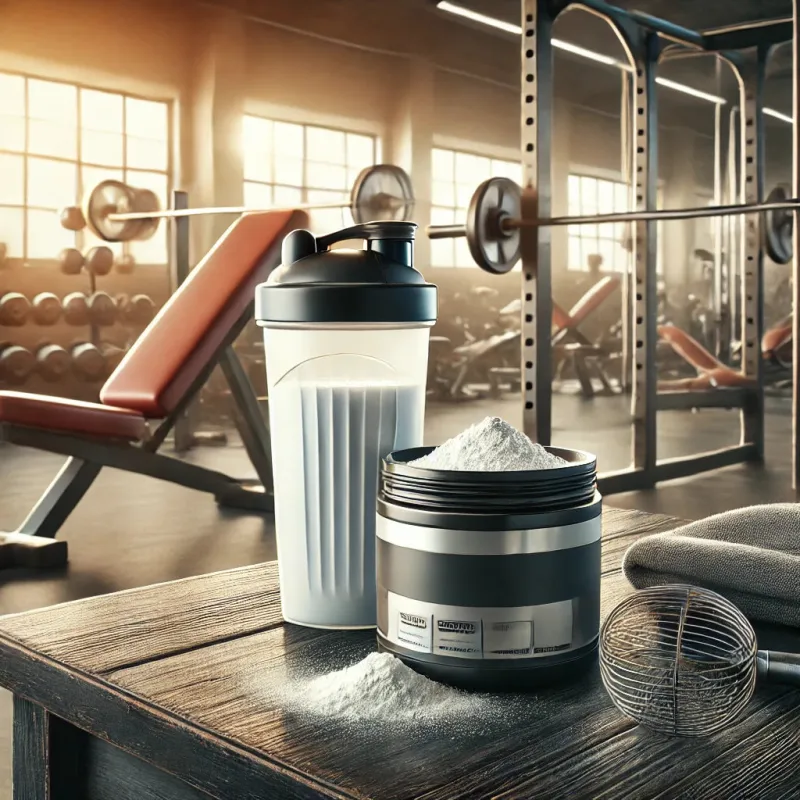
Photo: pre-workout supplement powder scoop gym weightlifting barbell, via thebarbellbox.com
There's a specific kind of confidence that hits about 20 minutes after you down a pre-workout. The tingles kick in, your veins start showing up like road maps, the music hits different, and you walk into the weight room feeling like you could flip a car. It's a genuinely great feeling.
The question nobody in the supplement industry wants you asking out loud is this: how much of that sensation is actually translating into measurable strength gains, and how much of it is just very effective sensory theater?
After spending time digging through ingredient research, clinical trial data, and the formulas of some of the best-selling pre-workouts on the US market, the answer is more complicated — and more uncomfortable — than most brands would like you to believe.
Understanding What a "Pump" Actually Is
First, let's define terms. The pump — that swollen, tight, full-muscle feeling during a workout — is caused by increased blood flow to working muscles. Blood rushes in faster than it can drain out, causing muscle cells to temporarily expand. Aesthetically, it looks incredible. Physiologically, it feels like progress.
But here's the critical distinction: a pump is a vascular response. It is not, in and of itself, a growth stimulus. Muscle hypertrophy is driven by mechanical tension, metabolic stress, and muscle damage — not by how engorged your biceps look in the mirror between sets.
The pump can accompany productive training. But it can also occur during completely ineffective training. That's the problem.
The Citrulline Situation
L-citrulline — and its more bioavailable cousin citrulline malate — has become one of the most ubiquitous ingredients in modern pre-workout formulas. And for good reason: it works. Citrulline converts to arginine in the kidneys, which then boosts nitric oxide (NO) production, dilating blood vessels and driving that pump effect.
The research on citrulline is genuinely solid for certain outcomes. Studies have shown it can reduce muscle soreness, improve endurance performance, and help with training volume — particularly in higher-rep, metabolic-style workouts. A 2010 study published in the Journal of Strength and Conditioning Research found citrulline malate supplementation allowed subjects to complete more reps before failure in bench press sets.
More reps before failure sounds like strength progress. But here's the nuance that gets lost: increased reps-to-failure from citrulline is largely a fatigue-delay mechanism, not a force production enhancement. You're recovering between sets faster and flushing metabolic waste more efficiently. That's useful — but it's not the same as your nervous system becoming more capable of producing maximal force.
For powerlifters or anyone training primarily in low-rep, high-load ranges (think 1-5 rep maxes), the evidence for citrulline's direct impact on peak strength output is noticeably thinner.
Nitrates: The Newer Pump Ingredient With a Complicated Resume
Dietary nitrates — sourced from ingredients like beetroot extract or sodium nitrate — have made serious inroads into premium pre-workout formulas over the last several years. The mechanism is similar to citrulline: nitrates convert to nitric oxide, expanding blood vessels and increasing muscular blood flow.
The research on nitrates for endurance athletes is actually quite strong. Cyclists and runners see measurable performance improvements. For strength athletes, the picture is murkier. A 2017 meta-analysis in the Journal of the International Society of Sports Nutrition found mixed results for nitrate supplementation on resistance training performance specifically, with some studies showing modest benefits and others showing no significant effect on measures like one-rep max or peak power.
The sensory experience of nitrate-enhanced pre-workouts is undeniably impressive. The pump is real and visible. But impressive-looking workouts and progressive overload on the bar are not the same benchmark.
The Ingredients That Actually Correlate With Strength Improvements
Here's where the industry analysis gets genuinely useful. If pump ingredients aren't the primary drivers of strength adaptation, what is?
Caffeine remains the most evidence-backed ergogenic aid in sports supplementation. Its mechanism is well understood — adenosine receptor antagonism reduces perceived exertion, delays fatigue, and has demonstrated improvements in both muscular endurance and, importantly, maximal strength output. Multiple meta-analyses confirm that caffeine meaningfully improves one-rep max performance across compound lifts. This is the real workhorse in most pre-workouts, and it's often underappreciated precisely because it's so familiar.
Creatine monohydrate is the other heavy hitter, and it's conspicuously absent from many pre-workout formulas (or present in doses too low to be effective) because it's cheap, unglamorous, and doesn't create a dramatic sensory experience. Yet the evidence base for creatine's impact on maximal strength, power output, and lean mass accrual is deeper than virtually any other supplement on the market.
Beta-alanine — the ingredient responsible for the characteristic tingling sensation — has a legitimate evidence base for improving muscular endurance in the 60-240 second effort range. It's less relevant for heavy compound strength work but genuinely useful for higher-volume training.
The Plateau Problem Nobody's Talking About
Here's the uncomfortable hypothesis that motivated this piece: if a pre-workout consistently makes your workouts feel incredible without necessarily driving progressive overload, it might actually slow your long-term development.
The mechanism is psychological as much as physiological. When you feel amazing in the gym — great pump, sharp focus, high energy — your subjective assessment of workout quality is elevated. You leave feeling like you crushed it. But if the weights on the bar didn't go up, if you didn't add a rep at a given load, if you didn't meaningfully increase training stress — you didn't actually progress.
The risk is that the sensory experience of a high-stimulant, high-pump pre-workout becomes a substitute for tracking objective progress markers. You chase the feeling instead of the numbers.
This is especially relevant for intermediate lifters who've cleared the beginner phase where almost anything produces results. At that stage, the gap between feeling productive and being productive widens significantly.
How to Actually Evaluate Your Pre-Workout
Rather than chasing the best pump experience, here's a more useful framework for evaluating whether your pre-workout is actually earning its place in your stack:
- Track your lifts, not your pump. Are you adding weight or reps consistently over 6-8 week periods? That's the only real progress metric.
- Check the label for clinically dosed caffeine (150-300mg), creatine (3-5g), and beta-alanine (3.2g). These have the deepest evidence bases for actual performance.
- Treat pump ingredients as a bonus, not the headline. Citrulline and nitrates can support training volume and recovery — just don't mistake the pump they create for a strength adaptation.
- Consider cycling your pre-workout to prevent tolerance buildup, particularly to caffeine, which loses effectiveness quickly with daily use.
The Verdict
The best pre-workouts on the market aren't necessarily the ones that make you feel the most superhuman. They're the ones that consistently support the training quality and progressive overload that actually move the needle on strength and muscle over months and years.
That skin-splitting pump might be the most marketable thing about your current formula. But if the weights on the bar aren't moving up, the only thing getting bigger is the supplement company's profit margin.