Collagen Powders Are Flying Off Shelves — But Are Lifters Actually Getting Anything Out of Them?
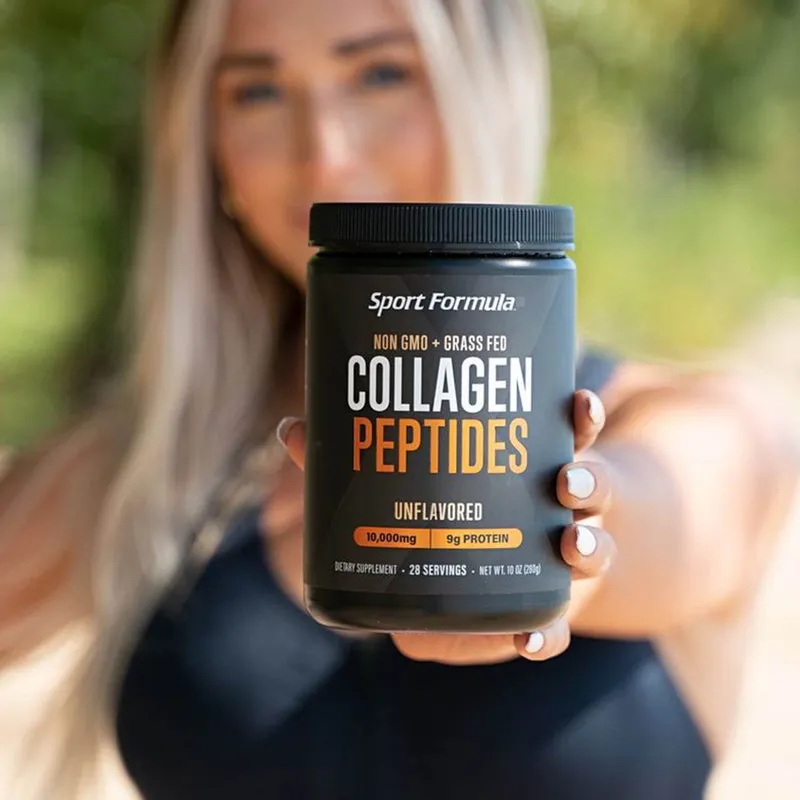
Photo: collagen powder supplement tub gym fitness workout recovery, via sportformula.com
Walk into any GNC or scroll through Amazon for five minutes and you'll notice collagen supplements are absolutely everywhere right now. Grass-fed, hydrolyzed, marine-sourced — the marketing is slick, the packaging is premium, and the price tags are steep. We're talking anywhere from $25 to $60 a month for a regular collagen habit.
The pitch is compelling: stronger joints, faster muscle recovery, better skin, improved gut health. For gym-goers already spending on protein powder, creatine, and pre-workout, collagen positions itself as the missing puzzle piece. But does the science actually back that up, or are supplement companies capitalizing on a trend that sounds better than it performs?
Let's get into it.
What Collagen Actually Is (And Why That Matters)
Collagen is the most abundant protein in the human body. It's the structural backbone of your connective tissue — tendons, ligaments, cartilage, skin, bones. Your body produces it naturally, but that production slows down as you age, starting in your mid-20s. By the time you hit 40, you're producing significantly less than you were at 20.
The collagen in supplements is typically hydrolyzed — meaning it's been broken down into smaller peptides called collagen hydrolysate or collagen peptides. The idea is that these smaller fragments are easier for your gut to absorb and can then be used by your body to support connective tissue repair.
Sounds reasonable on paper. The problem is what happens after absorption.
The Bioavailability Problem Nobody Wants to Talk About
Here's where things get scientifically awkward for collagen advocates. When you consume any protein — collagen included — your digestive system breaks it down into individual amino acids before it hits your bloodstream. Your body then uses those amino acids wherever it decides they're most needed. You don't get to direct traffic.
Collagen's amino acid profile is dominated by glycine, proline, and hydroxyproline. These are not the branched-chain amino acids (BCAAs) like leucine, isoleucine, and valine that are primarily responsible for triggering muscle protein synthesis. In fact, collagen is notably low in leucine, which is widely considered the key amino acid for flipping the muscle-building switch.
Compare that to whey protein, which has a complete amino acid profile and a high leucine content. Per gram of protein, whey is simply a more efficient tool for building and repairing muscle tissue. There's no real debate on that point among sports nutritionists.
So if you're buying collagen specifically to gain muscle, you're almost certainly leaving gains on the table compared to what you'd get from an equivalent serving of whey or casein.
Where Collagen Does Have a Legitimate Case
Here's the thing — dismissing collagen entirely would be intellectually dishonest, because there is real research suggesting it does something useful. Just not necessarily what most gym marketing implies.
Several well-designed studies, including research published in journals like Nutrients and Applied Physiology, Nutrition, and Metabolism, have found that collagen peptide supplementation — particularly when taken with vitamin C before exercise — can support connective tissue synthesis. The theory is that those glycine and proline-rich peptides provide the raw building blocks that tendons and ligaments need to repair and reinforce themselves.
For lifters dealing with chronic joint discomfort, tendinopathy, or anyone coming back from an injury, this is actually meaningful. Connective tissue heals slower than muscle, and if collagen supplementation can meaningfully accelerate that process, the $30-a-month cost might be justifiable — especially if it keeps you training consistently.
There's also emerging research on collagen's role in reducing joint pain associated with exercise. A 2019 study involving active adults showed statistically significant reductions in joint pain with collagen peptide supplementation over 12 weeks. That's not nothing.
Collagen vs. Whey: The Head-to-Head Every Lifter Needs to See
Let's put the two side by side in the context that matters most to serious gym-goers:
Muscle building: Whey wins, and it's not particularly close. The amino acid profile advantage is significant enough that if muscle hypertrophy is your primary goal, collagen shouldn't be your main protein source.
Joint and connective tissue support: Collagen has a credible edge here. Whey doesn't provide the specific amino acids that connective tissue synthesis relies on.
Recovery from intense training: This one's nuanced. Whey supports muscle recovery more directly. But if your limiting factor is joint soreness or tendon irritation rather than muscle fatigue, collagen may address the actual bottleneck.
Cost efficiency for protein intake: Whey wins again. You're paying more per gram of functional protein with collagen, and the protein you're getting is less useful for building lean mass.
So Who Should Actually Buy Collagen?
Based on what the research shows, collagen supplements make the most sense for a specific subset of gym-goers:
- Lifters over 35 who are noticing joint discomfort and want to be proactive about connective tissue health
- Anyone rehabbing a tendon or ligament injury where connective tissue repair is the actual priority
- High-volume athletes — runners, CrossFit athletes, competitive powerlifters — whose joints take a beating over time
- People already hitting their protein targets through other sources who want to add connective tissue support on top
If you're a 22-year-old trying to add 15 pounds of muscle and your joints feel fine, collagen probably isn't where your supplement budget should go. That same $35 a month spent on creatine monohydrate and a quality whey protein will do far more for your actual physique goals.
The Bottom Line
Collagen supplements aren't a scam — but they're frequently oversold to an audience that doesn't actually need what they do best. The marketing leans hard into the muscle recovery angle because that's what gym-goers want to hear, when the more honest pitch would be "this is a joint support product with some recovery benefits."
If your joints are your limiting factor, or if you're getting older and want to stay ahead of connective tissue wear and tear, a quality hydrolyzed collagen peptide supplement taken with vitamin C before training is a reasonable, evidence-supported investment.
If you're still building your supplement foundation and haven't nailed down creatine, quality protein, and a solid diet, skip the collagen for now. Get the fundamentals right first. Collagen can be a smart addition to an already solid stack — it's just not a substitute for one.