Creatine or Whey Protein: Here's How to Spend Your First $50 on Supplements Without Wasting a Dime
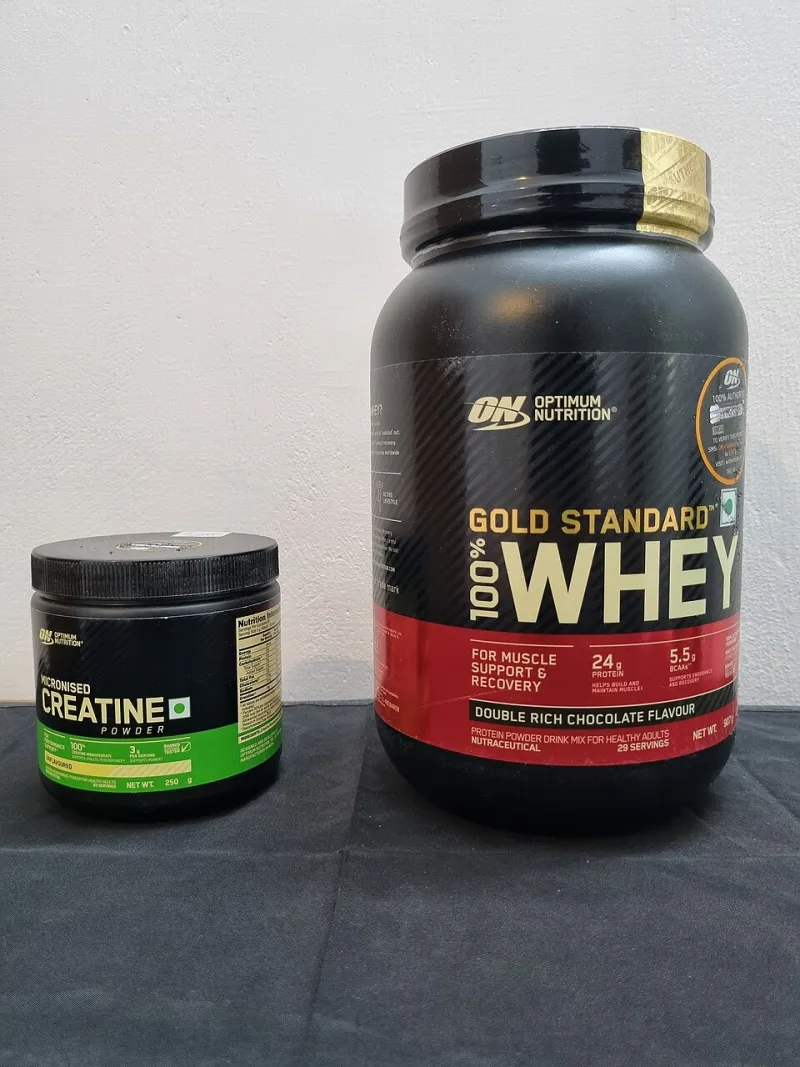
Photo: Ganesh Mohan T, CC BY-SA 4.0, via Wikimedia Commons
Let's be real — walking into a GNC or scrolling through Amazon for the first time as a beginner lifter is genuinely overwhelming. Shelves (and product pages) are packed with tubs, pouches, and bottles promising faster gains, bigger pumps, and faster recovery. And most of them cost more than your grocery run.
If you've got around $50 a month to work with, you've got two heavy hitters worth considering: creatine monohydrate and whey protein powder. Both are backed by solid research. Both are affordable. But only one is probably the right first buy for your specific goals — and that depends on a few things most beginner guides skip right over.
Let's get into it.
What Creatine Actually Does (And Why the Science Is Rock Solid)
Creatine isn't some mysterious compound cooked up in a lab last decade. It's a naturally occurring substance your body already produces, and you get small amounts from red meat and fish. The problem is that your muscles can only store so much of it — and most people's natural stores are running at about 60–80% capacity.
Supplementing with creatine monohydrate tops off those stores. Once your muscles are fully saturated, you get a measurable boost in ATP production — the energy currency your cells use during explosive, high-intensity efforts like heavy squats, sprints, or HIIT circuits.
In practical terms? More reps at the same weight. Faster recovery between sets. Slightly more power output over time. A 2003 meta-analysis published in the Journal of Strength and Conditioning Research reviewed over 100 studies and found creatine consistently produced meaningful improvements in strength and lean mass compared to placebo.
The best part from a budget perspective: a solid tub of pure creatine monohydrate (like Optimum Nutrition or BulkSupplements) runs $15–$25 for a 60–90 day supply in the US. That's roughly $0.15–$0.25 per serving. It's arguably the cheapest effective supplement on the market, dollar for dollar.
What Whey Protein Does (And When It Actually Matters)
Whey protein is different. It's not about performance in the gym — it's about recovery and muscle repair after you leave. When you lift, you create micro-tears in muscle fibers. Protein is what your body uses to rebuild those fibers thicker and stronger.
The issue isn't that protein powder is ineffective — it absolutely works. The issue is that it's essentially just food. If you're already hitting your daily protein target through chicken, eggs, Greek yogurt, cottage cheese, or canned tuna, a protein powder isn't adding much to the equation.
For most American adults, the general recommendation for muscle building sits around 0.7–1 gram of protein per pound of bodyweight per day. If you're a 180-pound guy trying to gain muscle, that's 126–180 grams of protein daily. That's doable through food — but it takes planning and consistency.
A mid-range whey protein like Dymatize ISO100 or Gold Standard Whey runs $35–$50 for a month's supply (roughly 30 servings). That's $1.00–$1.50 per serving — noticeably more expensive than creatine, and only beneficial if you're actually falling short on protein from your diet.
The Real Question: Are You Eating Enough Protein Already?
Here's the decision framework most guides won't give you:
Track your protein for 3 days before buying anything.
Use a free app like Cronometer or MyFitnessPal. Log everything you eat honestly. If you're consistently hitting your protein target, skip the whey and grab creatine — you'll feel a more noticeable difference in the gym almost immediately.
If you're consistently falling 40–60+ grams short of your daily protein goal (which is extremely common for people new to tracking), then whey protein is probably the smarter first purchase. No amount of creatine will compensate for inadequate protein intake when it comes to actually building muscle.
Busting a Few Myths Before You Buy
Myth #1: Creatine causes water retention and makes you look bloated. Creatine does draw water into your muscle cells — that's actually a good thing. It contributes to the "fuller" look that lifters want. Subcutaneous water retention (the puffy, soft kind) isn't a consistent finding in research.
Myth #2: You need to do a loading phase with creatine. Loading (taking 20g/day for 5–7 days) does speed up saturation, but taking 3–5 grams daily gets you to the same place in about 3–4 weeks. For most people, there's no urgent reason to load.
Myth #3: Protein powder is only for bodybuilders. Whey protein is just a convenient, fast-digesting food source. It's useful for anyone who struggles to hit protein goals through whole foods — athletes, busy professionals, older adults trying to preserve muscle mass, you name it.
Myth #4: More protein powder = more muscle. Once you hit your daily protein target, additional protein doesn't accelerate muscle growth. Your body doesn't store excess protein as muscle — it either gets used for energy or excreted.
How to Stretch $50 Across Both (If You Want)
If your diet is already decent on protein and you want to try both, here's a workable split:
- BulkSupplements Creatine Monohydrate (500g): ~$18–$22 on Amazon (roughly 100 servings)
- Store-brand or budget whey protein: ~$25–$30 for 2 lbs (roughly 25–30 servings)
That's a legitimate 30-day stack for under $50. You're not getting the premium flavors or fancy packaging, but the active ingredients are identical to what's in the expensive stuff.
So, Which One Should You Buy First?
Here's the short answer:
- Buy creatine first if your diet is reasonably high in protein and you want to see improvement in gym performance quickly.
- Buy whey protein first if you're regularly missing your daily protein target and recovery feels slow.
- Buy both if your budget allows and you want a solid foundational stack.
Neither supplement is magic. Both work. The difference is understanding what problem each one solves — and matching that to where your actual gaps are right now. Start there, and your $50 goes a lot further than it would if you just grabbed whatever had the coolest label.