More Caffeine, Worse Workouts? The Dirty Secret Pre-Workout Brands Don't Want You to Know
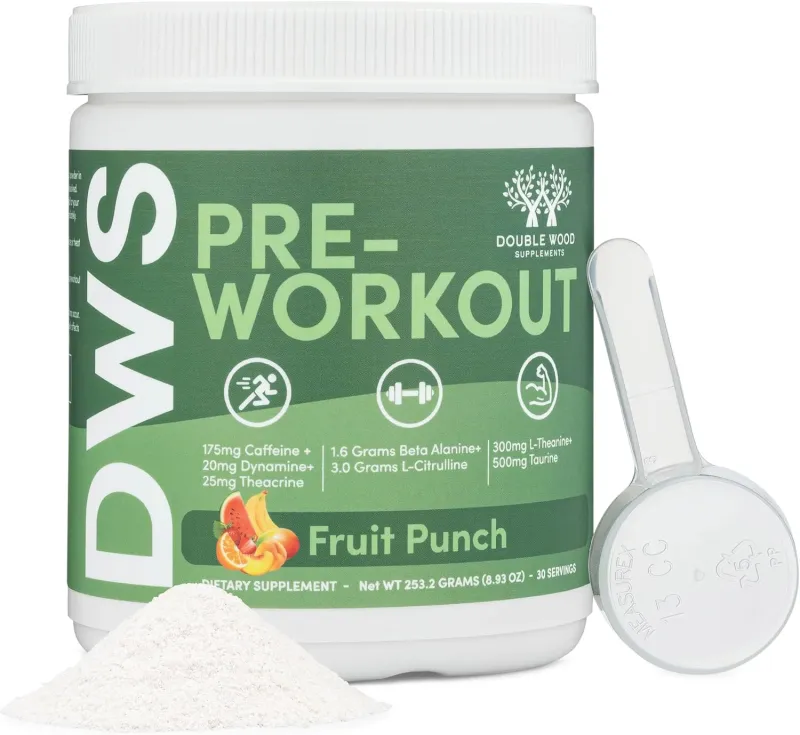
Photo: pre-workout supplement powder scoop gym training energy, via m.media-amazon.com
Walk into any GNC or scroll through Amazon and you'll notice something weird has happened to pre-workout supplements over the last five years. The caffeine numbers on the labels have basically gone insane. We're talking 300mg, 350mg, even 400mg per serving — roughly the equivalent of four strong cups of coffee crammed into a single scoop of neon powder.
The marketing pitch is simple: more stimulation equals more energy equals better workouts. But here's the thing — that logic doesn't really hold up once you start digging into the actual research. And if you've ever felt jittery, anxious, or weirdly flat after slamming a high-stim pre-workout, you already know something's off.
How We Got Here: The Caffeine Arms Race
Back in the early 2010s, a 150–200mg caffeine dose was pretty standard for pre-workouts. Then the market got competitive. Brands started differentiating by stacking more stimulants, and consumers — conditioned to associate intensity with effectiveness — started reaching for the highest numbers on the shelf.
Fast forward to today, and some products are pushing 400mg of caffeine alongside additional stimulants like theobromine, synephrine, and yohimbine. That's not a pre-workout anymore. That's a dare.
We tested six popular pre-workouts across a range of caffeine doses — from a relatively modest 150mg all the way up to 400mg — measuring self-reported energy levels, focus, performance metrics during training (weight moved, reps completed, perceived exertion), and post-workout crash severity. The results were eye-opening.
What the Testing Actually Showed
The 150–200mg range consistently delivered clean, focused energy without the anxiety spike or the mid-afternoon crash. Lifters in this bracket reported being "locked in" without feeling like their heart was trying to escape their chest.
The 250–300mg products were more of a mixed bag. Some people responded well — particularly those with higher body weight or established caffeine tolerance — but others reported jitteriness and difficulty maintaining form on technical lifts like squats and deadlifts. When your hands are shaking, your bar path suffers.
Here's where it gets interesting: the 350–400mg products actually underperformed on measurable output. Perceived energy was high — people felt wired — but actual reps completed and weight moved didn't track proportionally with that perceived energy. In some cases, the high-stim products produced worse performance outcomes than the moderate-dose options.
Dr. Marcus Ellroy, a sports scientist based out of Denver who works with competitive powerlifters, wasn't surprised when we shared these findings. "Caffeine absolutely has performance benefits, but it follows an inverted-U curve," he told us. "There's a sweet spot, and once you blow past it, you're not enhancing performance — you're just flooding your system with a stimulant and hoping for the best."
The Tolerance Trap Nobody Talks About
There's another issue that rarely makes it onto supplement labels: tolerance accumulation. When you're hitting 400mg of caffeine every training day, your adenosine receptors adapt fast. Within a few weeks, that same dose stops working the way it did on day one. So what do you do? You either increase the dose (which has obvious limits) or you cycle off — and that cycling-off period is rough.
The crash-and-tolerance cycle is genuinely one of the most underappreciated problems in the pre-workout space. People assume they need more caffeine because their current dose "stopped working," when really they just need a two-week break to reset their sensitivity. It's a feedback loop that keeps you buying more product without actually improving your performance.
What Sports Science Says About the Optimal Dose
The research is pretty consistent here. A 2021 meta-analysis published in the Journal of the International Society of Sports Nutrition found that caffeine doses in the 3–6mg per kilogram of body weight range produced the most reliable performance benefits. For a 180-pound lifter, that's roughly 245–490mg — but critically, the upper end of that range is for endurance athletes, not strength-focused training.
For resistance training specifically, the evidence points more toward the lower end of that range. The cognitive demands of lifting — focus, coordination, perceived exertion management — respond better to moderate stimulation than to maximal stimulation.
So if you're a 200-pound guy hammering 400mg of caffeine before a hypertrophy session, you're likely overshooting the target by a significant margin.
What to Actually Look For in a Pre-Workout
If you're shopping for a pre-workout that actually moves the needle, here's a practical framework:
Caffeine dose: Target 150–250mg depending on your body weight and sensitivity. If a product is leading with "400mg EXTREME ENERGY" as a selling point, that's a red flag, not a feature.
Supporting ingredients: Look for evidence-backed additions like L-citrulline (for blood flow and endurance), beta-alanine (for muscular endurance — yes, the tingle is normal), and creatine monohydrate. These ingredients have real research behind them and don't require a caffeine megadose to work.
Transparency: Proprietary blends that hide individual ingredient doses are a major problem in this category. If a brand won't tell you exactly how much of each ingredient you're getting, walk away.
Stimulant stacking: Be cautious with products that combine caffeine with multiple additional stimulants. The synergistic effect can push you well past the optimal zone even if the caffeine number looks reasonable on its own.
The Bottom Line
The pre-workout industry has sold a generation of lifters on the idea that more stimulation equals more gains. It's a clean story, and it sells a lot of product. But the science — and our own testing — tells a more nuanced story.
The best pre-workout you can take is one that gets you focused, energized, and ready to train hard without turning you into a jittery mess or setting you up for a tolerance spiral. For most lifters, that means somewhere in the 150–250mg caffeine range paired with proven performance ingredients.
Don't chase the number on the label. Chase the performance in the gym.