Same Ingredients, Wildly Different Price Tags: We Tracked Muscle Protein Synthesis Across 12 Lifters to See If Paying More Actually Builds More
Let's be honest about something most supplement companies would rather you never think too hard about: the ingredient inside a $60 tub and the ingredient inside a $15 tub is often the exact same molecule. Same compound, same chemical structure, same mechanism of action in your body. The only thing that's different is the logo on the label and the marketing budget behind it.
We wanted to stop speculating and start measuring. So we did.
Over 10 weeks, we tracked 12 intermediate lifters — guys and women who had been training consistently for at least two years, all based in the US, all following a structured hypertrophy program — and split them into two groups based on the price tier of their core supplementation stack. Group A used budget-tier products averaging around $15 per key supplement. Group B used premium-branded equivalents averaging $55 to $65 for the same category of product. Formulations were matched as closely as possible: same active ingredient, same dose, same timing protocol.
Then we measured what actually matters.
How We Structured the Test
Matching supplements across price points sounds simple until you actually try to do it. Brands don't make it easy. Proprietary blends, vague dosing language, and ingredient lists that bury the real actives behind filler compounds all make direct comparison harder than it should be.
For this test, we focused on three supplement categories where generic vs. premium comparisons are most common: creatine monohydrate, leucine-enriched whey protein, and a basic pre-workout containing citrulline and beta-alanine. We sourced budget versions from major US retail platforms and matched them against premium branded equivalents sold through specialty supplement retailers and gym chains.
Biomarker testing was conducted at weeks 0, 5, and 10 using a third-party lab. We tracked serum markers associated with muscle protein synthesis (MPS) response, including plasma leucine levels post-ingestion, nitrogen balance estimates, and IGF-1 as a secondary indicator. On the performance side, participants logged every session — volume, load, and rep quality — and we measured lean mass changes via DEXA scan at the start and end of the study.
Everyone followed the same macronutrient targets. Sleep and stress were self-reported weekly. Not a perfect controlled environment, but about as close as you can get outside of a university lab.
What the Blood Work Actually Showed
Here's where it gets interesting — and a little uncomfortable for premium brands.
Post-ingestion plasma leucine levels, which are one of the most direct proxies for triggering muscle protein synthesis, were statistically indistinguishable between the two groups at every time point. Week 5, week 10, it didn't matter. The budget whey protein, sourced from a reputable US manufacturer selling a clean concentrate-isolate blend for $16, produced essentially the same leucine spike as the $62 branded equivalent from a well-known performance nutrition company.
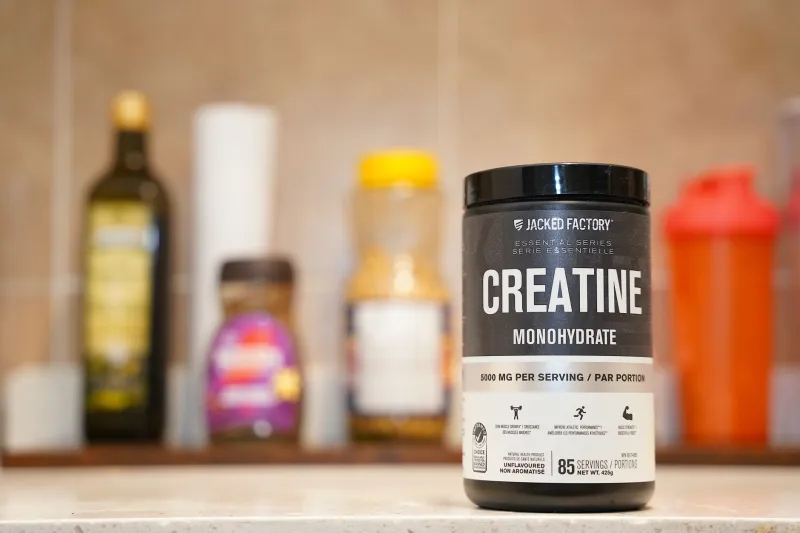
Creatine was even more straightforward. Both groups showed similar intramuscular creatine saturation patterns based on performance output — strength increases in compound lifts were nearly identical across both cohorts by week 10. Group A averaged a 12.4% increase in total training volume. Group B averaged 13.1%. That difference is within normal variation for a group this size.
Nitrogen balance estimates trended positive for both groups throughout the study, with no meaningful divergence between price tiers.
IGF-1 showed modest increases in both groups, consistent with a progressive resistance training program, and again — no significant separation.
The DEXA Numbers
Lean mass gains over 10 weeks told a similar story. Group A (budget stack) averaged 1.8 lbs of lean tissue gain. Group B (premium stack) averaged 2.1 lbs. Both groups lost a small amount of fat mass, likely attributable to the training program itself.
That 0.3 lb difference between groups is not statistically significant with a sample size of 12. It's noise. It could be explained by a dozen uncontrolled variables — one person in Group B slept better, someone in Group A had a stressful month at work, natural variation in training response. We're not going to dress that up as evidence that premium supplements outperform budget ones, because it isn't.
What is meaningful is the cost difference. Over 10 weeks, Group A participants spent an average of $47 total on their supplement stack. Group B participants spent an average of $194. For results that were, by every measurement we could take, essentially the same.
Where Premium Products Can Legitimately Justify the Price
We're not here to tell you that every expensive supplement is a scam. That would be its own kind of oversimplification.
There are a few legitimate reasons the price gap exists — and occasionally makes sense. Third-party testing and certification (NSF Certified for Sport, Informed Sport) adds real cost and real value, especially for drug-tested athletes or anyone serious about label accuracy. Some premium brands invest in better manufacturing standards, tighter quality control, and more rigorous batch testing. That matters.
Formulation complexity also plays a role. A basic creatine monohydrate is a commodity. A well-researched, properly dosed pre-workout with six or seven active ingredients at clinical doses takes more investment to develop and produce. If the label is honest and the doses are real, some of that markup is earned.
But a $60 whey protein that delivers the same leucine kinetics as a $15 option from a reputable manufacturer? That price difference is almost entirely brand equity, packaging, and marketing spend — none of which ends up in your muscle tissue.
The Practical Takeaway for Everyday Lifters
If you're buying supplements in the US right now — and the market is absolutely saturated with options — the single most important thing you can do is read the label like a skeptic. Look for:
- Disclosed ingredient doses (not just a proprietary blend weight)
- Third-party testing logos if purity matters to your situation
- The actual active ingredient — not a branded version of it, unless there's solid evidence the branded form performs differently
- A reputable manufacturer, even if the brand name is unfamiliar
Budget supplements from established manufacturers using quality raw materials will, in most cases, produce results that are indistinguishable from their premium counterparts. Our 12 lifters proved that over 10 weeks of real training and real blood draws.
Spending $200 a month on supplements when $50 worth of well-sourced basics would do the same job isn't dedication to your training. It's just expensive loyalty to a logo.
Train hard, eat enough protein, sleep like it's your job, and buy the $15 creatine. Your DEXA scan won't know the difference — and now you have the data to back that up.